You Typed It, Then Deleted It: The Secret Life of the Comment You Never Sent
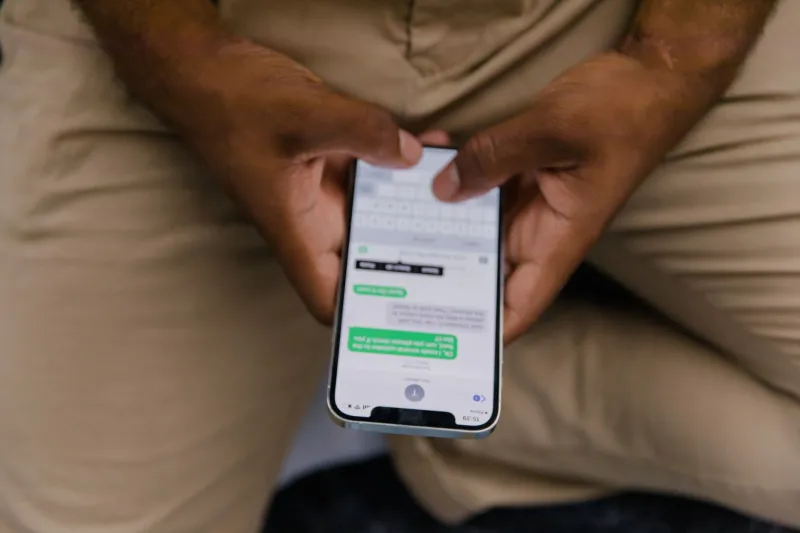
You had something to say. You know you did. You opened the reply box, your fingers moved, words appeared — and then you just... stopped. Highlighted it all, hit delete, and kept scrolling like nothing happened.
That moment is more common than almost anyone talks about. And it's not small. It's actually one of the most telling things about how we navigate online life in 2024.
The stuff we don't post might be more revealing than anything that actually makes it onto our feeds.
The Draft Graveyard Nobody Talks About
Every major social platform has some version of it — the comment box, the reply thread, the quote-tweet field. And every single one of those spaces has become a place where thoughts go to die.
Researchers have actually studied this. Facebook ran internal studies years ago that tracked when users started typing and then abandoned their posts without publishing. The results were striking: a significant chunk of what people begin to write never gets shared. That's a massive invisible layer of communication that platforms quietly monitor but audiences never see.
Think about the last time you almost clapped back on someone's political post, then reconsidered. Or started to correct a piece of misinformation in a comment section, then thought better of it. Or typed out a genuine, vulnerable response to a creator's emotional video — then felt weird about it and erased the whole thing.
Yeah. You're not alone. Not even close.
Fear Is the Editor Nobody Hired
So what's actually making us hit delete? It's not one thing — it's a whole layered cocktail of anxieties that most of us don't even consciously name.
First, there's the judgment factor. Social media has made audiences out of everyone. When you post a comment, you're not just talking to the person you're replying to — you're potentially talking to their entire following, their followers' followers, and whoever the algorithm decides to show it to next. That's a lot of invisible eyes on what started as a casual thought. And people are ruthless. A single poorly-worded sentence can turn into a ratio, a screenshot, a meme. The stakes feel enormous even when they objectively aren't.
Then there's what a lot of people call context collapse — the idea that online, you're always speaking to multiple audiences at once. Your coworkers, your college friends, your family, that person you met at a concert three years ago — they're all potentially reading the same thing. A joke that lands perfectly with one group might absolutely bomb with another. So instead of navigating that complexity, a lot of us just... opt out of saying it at all.
The Algorithm Knows, and That's the Problem
Here's a layer that doesn't get nearly enough attention: people are increasingly self-censoring not just because of other humans, but because of platforms themselves.
There's a growing, largely anecdotal but very real awareness that certain words, topics, or even tones can get your content deprioritized, shadowbanned, or flagged. Creators especially have become hyper-conscious of this. You'll see them spell out words in weird ways, use euphemisms, or flat-out avoid topics they'd otherwise engage with — all in an effort not to trip some invisible wire in the content moderation machine.
But this isn't just a creator problem. Regular users are picking up on it too. People are starting to wonder whether commenting on certain posts will affect what they see. Whether engaging with specific content will signal something to the algorithm about who they are. It sounds paranoid, but platforms have given us plenty of reasons not to trust the black box.
The result? A kind of digital self-policing that goes way beyond just being socially aware. It starts to feel like surveillance — and it changes how freely you're willing to think out loud.
The Permanence Problem
The internet doesn't forget. That's not new information, but it's gotten heavier as the years go on.
What you typed in 2017 can resurface in 2024. Screenshots exist. Archives exist. And the cultural context that made something totally acceptable to say back then might have shifted dramatically. People have watched public figures — and completely private individuals — get roasted for years-old posts that nobody would have looked twice at when they were written.
That awareness is sitting in the back of people's minds every time they open a comment box. Is this something I want attached to my name forever? Even if it's a reasonable opinion, even if it's a joke, even if it's just a genuine question — the risk calculation happens fast, and a lot of the time, silence wins.
This is especially true for younger users who grew up being told that the internet is permanent. Gen Z in particular has been trained to think carefully about digital footprints. Which sounds responsible, but it also means a generation of people who've learned to edit themselves before they even start.
What We're Actually Losing
Here's the part that should bother us: self-censorship at this scale isn't neutral. It has real costs.
Genuine discourse requires people to actually say things — including things that are uncomfortable, unpolished, or not fully formed. When everyone's quietly deleting their half-thoughts, the conversations that do happen online get flattened. What's left tends to be either the most performative takes (crafted for engagement) or the most extreme voices (who genuinely don't care about the consequences). The messy, honest middle gets lost.
There's also something quietly isolating about it. A lot of the deleted comments aren't controversial at all — they're vulnerable. People start to type something real and then pull back because it feels like too much, or too weird, or like nobody actually wants to hear it. And so connection gets swapped out for consumption. You watch, you scroll, you feel something, and you keep it entirely to yourself.
That's a loneliness that's hard to name, but a lot of people are living it.
So What Do You Do With All of This?
There's no clean answer here. Some self-censorship is genuinely healthy — the internet really doesn't need every unfiltered thought anyone has ever had. Thinking before you speak, or type, is not a bad thing.
But there's a difference between thoughtfulness and fear. And a lot of what's happening right now leans closer to fear — fear of judgment, fear of permanence, fear of algorithmic punishment, fear of being misread by an audience you didn't choose.
Maybe the move is just to notice it. To catch yourself in that moment of deletion and ask honestly: am I not posting this because it's actually not worth saying, or because I'm scared? Sometimes the answer will be the first one. But sometimes it'll be the second — and that's worth sitting with.
The comment you almost posted might have been the most interesting thing you had to say all day. The fact that nobody got to read it is, quietly, a kind of loss.