Follower Counts Are Lying to You — And You Already Knew It
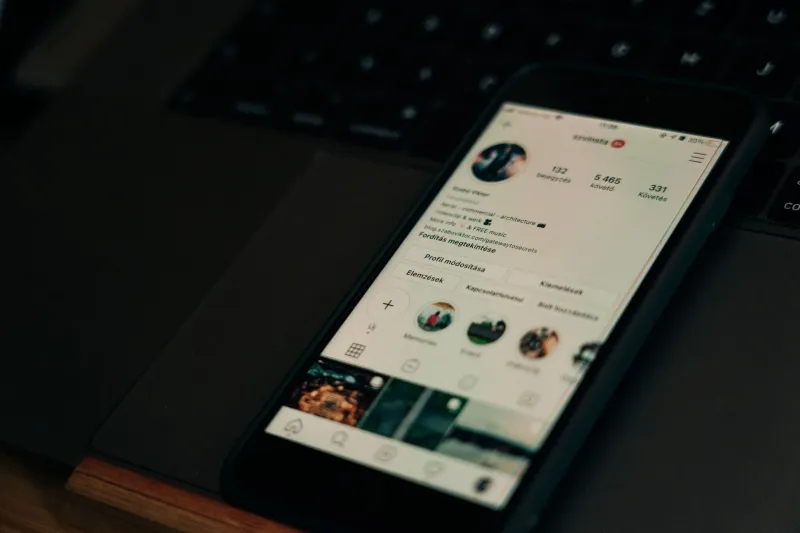
There's something quietly embarrassing about checking your follower count and feeling good about it. Not because the number is small — but because somewhere in the back of your brain, you know it doesn't mean what you want it to mean. You follow them, they follow you back, and suddenly the platform is telling you that you're connected. Mutual. A community of two, at minimum.
Except you've never spoken. You've never really seen each other's content. You just exist in each other's lists, like names in a phone book nobody opens anymore.
The Mutual Follow Is a Social Contract Nobody Actually Signed
When someone hits follow and you hit it back, the platform treats that as a relationship. It logs it, counts it, and uses it to shape what shows up in both of your feeds. But from a human standpoint? You've done almost nothing. You've clicked a button. That's it.
The "mutual follow" as a concept borrows its emotional weight from real-world reciprocity — the idea that if someone acknowledges you, you acknowledge them back, and something real gets built. But online, that mechanic has been stripped of almost everything that makes it meaningful. There's no conversation. No shared experience. No actual exchange of anything except a number going up by one.
And yet creators, influencers, and regular users alike lean on those numbers hard. A brand with 200K followers feels legitimate. A creator with 50K mutuals feels influential. A regular person with 800 followers feels like they have a real audience. The numbers carry social weight even when they're functionally hollow.
Algorithms Don't Care About Your Relationships
Here's the part that really pulls the rug out: even if you and your mutual follow wanted to stay connected, the algorithm is actively working against you. Platforms like Instagram, TikTok, and X (formerly Twitter) don't show you everything from everyone you follow. They show you what they've decided you'll engage with — and that decision is based on behavior patterns, not relationships.
So your mutual might post every single day and you might never see it. You might be incredibly active and they might never encounter your content. The follow is there. The connection, algorithmically speaking, has been quietly deprioritized.
This creates a bizarre situation where you can feel simultaneously surrounded by people and completely invisible. Creators with hundreds of thousands of followers report feeling isolated in ways that don't make sense on paper. Regular users with healthy follow counts feel like they're shouting into a void. Both experiences are valid — because both are, in a real sense, true.
Why We Still Chase the Number Anyway
Knowing all this, why do we still treat follower counts like they mean something? Part of it is that the platforms designed them to feel meaningful. The number goes up, there's a little dopamine hit, and your brain files that under "progress." It's the same mechanism that makes people collect things they'll never use — the accumulation itself becomes the point.
But there's also something more human going on. In a culture where community can be hard to build in physical spaces — where people move cities constantly, work remotely, and spend increasing amounts of time online — the follow count starts to function as a proxy for belonging. It's not real belonging, but it looks like it from a distance. And sometimes looking like it is enough to get through the day.
The problem is when the proxy starts replacing the thing itself. When creators optimize for follower growth instead of actual engagement. When users feel validated by numbers instead of conversations. When the metric becomes the goal and the community it was supposed to represent quietly disappears.
What Real Connection Actually Looks Like Online
It's not nothing, by the way. Real digital communities do exist. They tend to be smaller, messier, and way less impressive as a number. They happen in Discord servers and niche subreddits and comment sections where the same fifteen people keep showing up. They happen in group chats that started because two strangers bonded over a creator they both loved. They happen in the DMs that feel slightly awkward to send but somehow lead somewhere real.
The common thread is that actual connection requires something to happen. A response. A thread. A shared laugh at a specific reference that only people who've been paying attention would catch. You can't manufacture that with a follow button, no matter how mutual it is.
Creators who've figured this out tend to talk about their "real" community in terms that have nothing to do with their total follower count. They'll mention the people who show up every time, who remember things they said six months ago, who bring their own energy to the space. That group is almost always a fraction of their follower count — sometimes a very small fraction.
So What Do You Actually Do With This?
You don't have to delete your accounts or stop tracking your numbers. But it might be worth asking yourself what you're actually looking for when you refresh that count. If it's validation, that's human — just know that the number won't stay satisfying for long. If it's community, the follow count is the wrong place to look.
Start paying attention to where real exchanges are happening in your digital life. Who actually replies? Who do you actually reply to? Where do you feel like someone would notice if you disappeared? That's your real network. It's probably smaller than your follower count. It's definitely more valuable.
The mutual follow myth isn't going anywhere — the platforms are too invested in making the numbers feel meaningful. But you don't have to buy into it. The count is a starting point, not a destination. What you build from there is up to you.