Whose Slang Is It Anyway? The Viral Language Economy and Who Actually Gets Paid
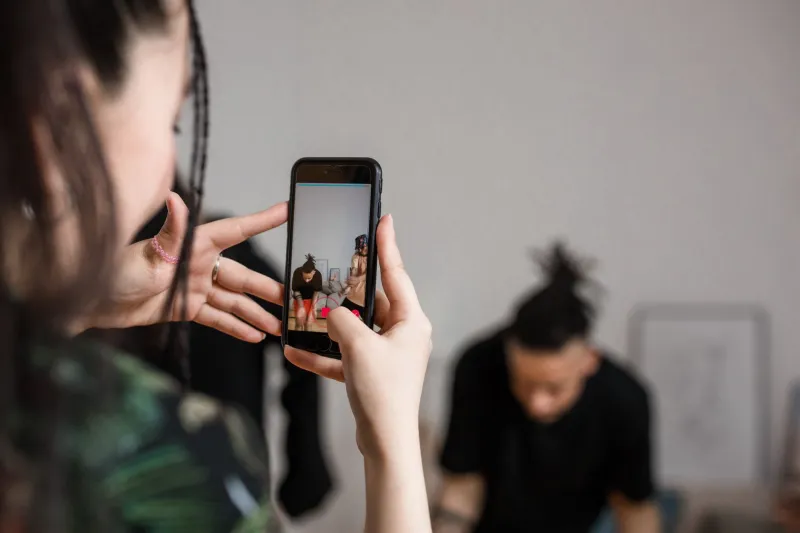
Somewhere right now, a brand's social media manager is typing "no cap" into a product announcement. A mid-size influencer from Ohio is ending her video with a phrase she picked up from a creator she doesn't follow. A startup is paying a consultant to make their copy sound more "authentic" — which, in practice, means making it sound more like how Black and Southern internet communities have been talking for years.
Language has always traveled. But the internet has turbocharged that movement in ways that raise some genuinely uncomfortable questions about credit, commodification, and who the algorithm actually favors when it decides what's worth amplifying.
The Feed Has an Accent (It's Just Not Always Obvious)
Here's something that doesn't get talked about enough: the way you talk affects how you perform online. Not just in terms of relatability or audience connection — we mean algorithmically. On platforms like TikTok, engagement signals drive reach, and engagement is partly driven by how quickly and viscerally a video lands. Certain speech rhythms, certain cadences, certain turns of phrase hit faster than others.
And a significant chunk of what hits fastest traces back to Black American vernacular — AAVE, or African American Vernacular English. Phrases like "it's giving," "understood the assignment," "no cap," "slay," "periodt" — these didn't materialize out of the internet ether. They have roots in Black communities, many of them specifically in queer Black spaces, that go back decades before they ever showed up in a brand's Instagram caption.
The same goes for regional dialects more broadly. Southern slang, Chicano English inflections, New York drill cadence, Louisiana creole-influenced phrasing — these linguistic fingerprints shape internet culture constantly, often without the originators getting so much as a mention in the discourse.
Going Viral Is a Language Game
Creators have figured this out, and the smart ones are actively working it. Using the right phrase at the right moment doesn't just make your video feel current — it can functionally expand your reach by tapping into an already-engaged community that recognizes the language as theirs.
That's not inherently cynical. Language is meant to be shared, and cultural exchange is real and valuable. But there's a difference between exchange and extraction. When a creator from outside a community borrows its language to boost their numbers — without engaging with or crediting that community — it starts to look a lot more like mining than mixing.
And the algorithm doesn't ask questions. It just sees engagement and pushes the content further. Which means the version of a phrase that goes truly mainstream is often not the one from the originating community. It's the one from a creator who already had the follower count to give it escape velocity.
AAVE and the Invisible Tax on Black Creators
Let's talk about something specific, because it deserves more than a passing mention. Black creators have documented extensively — through their own platforms, through journalism, through collective callouts — the frustrating cycle of watching their language, their aesthetics, and their creative formats get picked up by non-Black creators who then outperform them on the same content.
This isn't just an anecdote. There's research backing it up. Studies on platform bias have found that Black creators face higher rates of content moderation, lower rates of algorithmic promotion in some categories, and more difficulty monetizing despite driving significant cultural trends. The language they originate gets laundered through whiteness and then handed back to them as "mainstream."
It's a weird, exhausting loop: create the culture, watch the culture get taken, watch the taken version get celebrated, repeat.
For creators navigating this, it's not just an emotional frustration — it's a business problem. When the version of your voice that performs best on a platform is a diluted, de-raced copy of it, the economics get genuinely hostile.
Regional Dialects Are Having a Moment (But Not Always for the Right Reasons)
Beyond AAVE, regional American dialects are having a complicated renaissance online. Southern accents, once a reliable punchline in mainstream media, are now pulling serious numbers on TikTok — particularly in the cooking, home, and lifestyle spaces. Appalachian English has found a weirdly devoted audience. Boston, Philly, and New York accents get entire fan accounts dedicated to them.
Some of this is genuine appreciation. People are hungry for content that sounds like somewhere, especially in an era when algorithmic optimization has pushed so much creator speech toward a kind of placeless, pan-American neutrality. Regional voice is a form of authenticity, and audiences respond to it.
But here's the catch: that appreciation can curdle quickly into caricature. Regional dialects get cosplayed for comedic effect by people who don't live there. Specific phrasings get stripped of their geographic context and become just another trend sound. The community that actually speaks that way doesn't necessarily see the traffic, the brand deals, or the growth.
So What Does Ethical Language Borrowing Even Look Like?
This is the part where we resist the urge to hand you a clean five-step checklist, because honestly? It's messier than that.
Language evolves through contact and exchange — always has, always will. The problem isn't influence. It's invisibility. It's the failure to acknowledge where something came from, to financially support the communities that created it, to amplify the originators rather than just the trend.
For creators, that might look like crediting the community you're pulling from in your caption. Collaborating with creators from that community rather than just adopting their style. Asking yourself honestly whether you're participating in a culture or just borrowing its aesthetic for reach.
For platforms, it looks like auditing why certain voices get suppressed and others get boosted — and being transparent about those findings instead of burying them in terms-of-service updates nobody reads.
For audiences — and this is where The KRML lives, right here with you — it means paying attention to who you're following, where the sound you love actually came from, and whether the creator you're watching is someone from that world or someone passing through it for clout.
Language Is Power, and Power Has a Paper Trail
Every phrase that's currently living rent-free in your head started somewhere. Someone's grandmother, someone's neighborhood, someone's group chat. The internet compressed all of that into a single viral moment, but the origin didn't disappear — it just got convenient to ignore.
Your feed reflects a language ecosystem that's richer, more regional, and more culturally layered than any algorithm is giving credit for. The least we can do is notice it.